Customers leave platforms that feel slow, confusing, or difficult to use. Teams waste hours dealing with disconnected systems, repetitive workflows, delayed reporting, and operational issues that continue growing as businesses scale.
And honestly, we are almost in the middle of 2026 now. Whether someone runs a business or simply uses digital platforms daily as a customer, the difference between a smooth experience and a frustrating one is immediately noticeable. People lose patience quickly with slow dashboards, broken mobile experiences, difficult onboarding flows, or platforms that require too much effort to complete simple tasks.
According to research highlighted by BIMA, 33% of customers switched brands due to poor digital experiences. Among users aged 25 to 34, the number rose to 64%.
Because of this, modern web development in 2026 focuses on responsive systems, connected workflows, scalable infrastructure, and user experiences that simplify interactions across both customer-facing and operational platforms. AI-powered interactions, automation, and personalization are also influencing how businesses build and maintain digital experiences across industries.
Why Businesses Are Rebuilding Digital Platforms Around Workflows
Believe it or not, gone are the days when businesses treated websites as simple online brochures. Digital platforms support customer interactions, service delivery, internal workflows, reporting systems, and operational coordination across industries.
Users expect fast interfaces, responsive systems, personalized interactions, and connected experiences across devices. Because of this, businesses invest in modern web development trends centered around scalability, integrations, performance, and maintainable systems instead of static page delivery.
What starts as a basic website often grows into customer portals, onboarding systems, dashboards, analytics platforms, scheduling systems, and workflow-driven operational tools used across departments daily.
Businesses Need Systems Instead of Static Websites
Operational complexity grows fast once digital platforms begin supporting customers, internal teams, vendors, and multiple workflows together. Supporting a modern digital experience requires much more than responsive interfaces alone.
Integrations, reporting systems, payment processing, scheduling tools, automation workflows, and live synchronization place pressure on older website architectures.
After years of working on business platforms across different industries, one pattern stays consistent: interface design alone does not solve scalability issues. Backend coordination, structured architecture, and maintainable systems usually decide how well a platform performs under operational demand.
That demand is also pushing businesses toward web development services built around connected systems, scalable infrastructure, and workflow-oriented platforms instead of static website delivery alone.
Why User Expectations Have Changed Across Every Industry
User expectations are influenced by every digital platform people interact with daily. Someone ordering food, streaming content, using a banking app, or shopping online carries those experience standards into every other platform they use.
A slow onboarding flow in healthcare, confusing navigation in SaaS software, or delayed checkout experience in retail stands out immediately when users already interact with smoother platforms elsewhere.
Fast interfaces, responsive workflows, mobile accessibility, and personalization are expected by default across industries.
User Expectations Are Built Around Everyday Digital Experiences
Consumer apps changed how people interact with digital platforms across industries.
Banking apps normalized instant visibility and fast authentication. Food delivery apps simplified tracking and notifications. Streaming platforms influenced expectations around responsiveness and continuity across devices. E-commerce platforms normalized personalization and recommendation systems.
According to insights published by Deloitte, more than 90% of Gen Z and millennial consumers found digital features like payment integrations, instant notifications, and personalized recommendations useful.
That expectation difference across customer groups is pushing businesses to improve accessibility, responsiveness, and usability across digital platforms.
Small Experience Issues Create Bigger Business Problems
Users have very little patience for unnecessary complexity.
Common frustrations include:
- Slow dashboards
- Repetitive workflows
- Broken mobile experiences
- Difficult onboarding processes
- Delayed responses across systems
- Inconsistent navigation patterns
Even small usability problems can affect customer trust, engagement, retention, and internal adoption across teams.
Every Industry Faces Pressure from Better Digital Experiences
Healthcare platforms are compared against banking apps. SaaS onboarding experiences are compared against e-commerce simplicity. Enterprise systems are judged against consumer-grade usability.
Businesses are competing against the best digital experiences users interact with daily, regardless of industry.
Businesses investing in digital experiences in web development focus on usability, responsiveness, accessibility, and connected workflows that feel smooth across devices and operational environments.
How Different Industries Are Using Modern Web Development
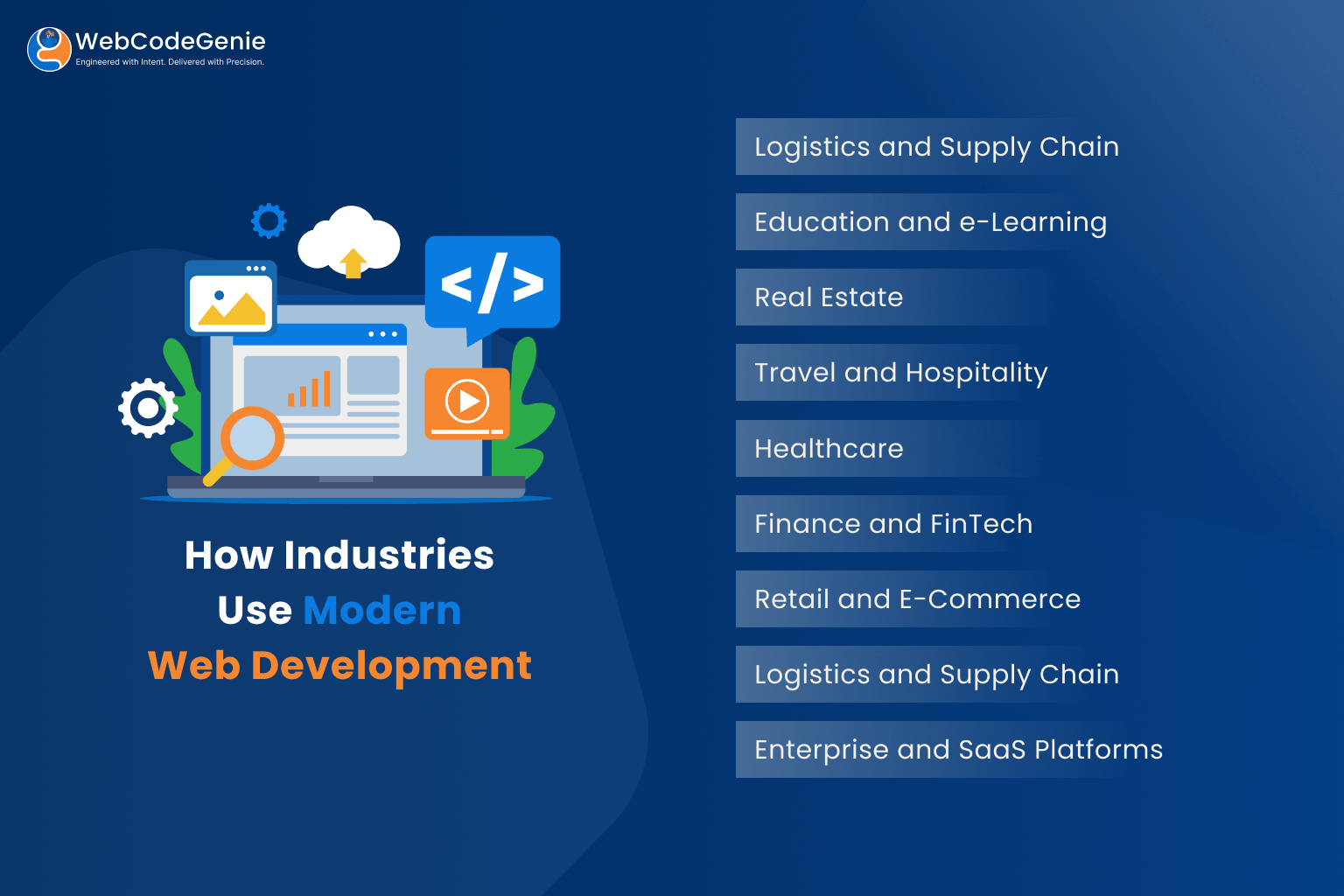
Digital platforms support much more than customer interaction across industries. Businesses use web platforms for communication, workflows, analytics, reporting, service delivery, customer engagement, and internal systems across departments.
As user expectations continue rising, businesses are investing in modern web development to build responsive systems, connected platforms, and scalable digital experiences that support expanding business demands and platform complexity.
Healthcare
Healthcare businesses now depend more on digital systems to improve patient accessibility, reduce administrative friction, and support faster coordination between departments.
Modern healthcare platforms often include:
- Patient portals and digital medical records
- Telemedicine and virtual consultations
- Online appointment scheduling
- Prescription and report management
- Internal communication dashboards
The healthcare IT market itself reflects how rapidly healthcare infrastructure is evolving digitally. According to Grand View Research, the global healthcare IT market is expected to reach nearly USD 2.86 trillion by 2033.
One thing healthcare providers learn quickly is that usability matters just as much as functionality. Patients already expect responsive experiences similar to consumer apps they use daily. Slow portals, difficult appointment systems, or fragmented workflows create frustration very quickly in healthcare environments.
Finance and FinTech
Finance and FinTech platforms require high-performance systems, responsive interfaces, and secure infrastructure to maintain customer trust.
Modern financial platforms commonly support:
- Real-time transaction dashboards
- Digital onboarding systems
- Fraud monitoring and alerts
- Secure payment infrastructure
- Investment tracking and analytics
According to Allied Market Research, the global fintech technologies market is projected to reach nearly USD 700 billion by 2030. That growth reflects how heavily businesses and consumers now rely on digital financial ecosystems.
Financial platforms also face very little tolerance for friction. Users expect instant visibility, smooth onboarding, and responsive interactions across devices while handling sensitive financial information securely.
Retail and E-Commerce
Retail businesses compete through customer experience quality, personalization, and platform responsiveness.
Modern retail platforms now support:
- Personalized shopping experiences
- Product recommendation systems
- Live inventory visibility
- Omnichannel customer journeys
- Mobile-first checkout systems
- Customer dashboards and order tracking
According to Grand View Research, the global retail e-commerce market could cross USD 12.3 trillion by 2030. At the same time, the e-commerce software market continues expanding rapidly as businesses invest in stronger digital infrastructure.
Behind every smooth shopping experience sits a much larger operational ecosystem involving payment systems, inventory synchronization, shipping coordination, customer analytics, and marketing automation platforms.
Logistics and Supply Chain
Logistics businesses rely heavily on connected systems and operational visibility to manage large-scale workflows efficiently.
Modern logistics platforms often include:
- Real-time shipment tracking
- Warehouse management systems
- Fleet and vendor coordination
- Workflow automation
- Reporting and operational analytics
- Internal communication systems
According to Grand View Research, the digital logistics market is projected to exceed USD 93 billion by 2030. Supply chain software investments are also growing steadily as businesses focus on operational efficiency and data visibility.
After working on operational platforms for years, one thing stands out clearly in logistics environments: disconnected systems create operational friction very fast. Even small delays in synchronization or reporting can affect workflows across entire supply chains.
Education and eLearning
Educational institutions and training platforms now rely heavily on digital experiences for accessibility, flexibility, and student engagement.
Modern education platforms commonly support:
- Virtual classrooms and learning portals
- Student dashboards and progress tracking
- Online assessments and certification systems
- Course management platforms
- Multi-device learning environments
According to Mordor Intelligence, the global e-learning market is expected to cross USD 461 billion by 2031, showing how rapidly digital learning infrastructure continues expanding worldwide.
Students now expect learning experiences that feel responsive, intuitive, and interactive rather than static or difficult to navigate.
Real Estate
Real estate businesses use digital platforms to simplify property discovery, communication, lead management, and client coordination.
Modern real estate systems often include:
- Interactive property listings
- Virtual property tours
- Inquiry and booking workflows
- CRM and lead management systems
- Agent and client dashboards
According to Grand View Research, the real estate software market is projected to reach nearly USD 32 billion by 2033.
Property buyers and renters now expect smooth browsing experiences, responsive mobile platforms, and faster communication throughout the decision-making process.
Travel and Hospitality
Travel businesses rely heavily on digital systems to manage bookings, itineraries, customer engagement, and support services across devices.
Modern travel and hospitality platforms often support:
- Real-time booking systems
- Personalized travel recommendations
- Customer self-service portals
- Loyalty and rewards management
- Multi-device booking experiences
According to Grand View Research, both the hospitality software market and the online travel agency market continue growing steadily as customer expectations around convenience and digital accessibility rise globally.
Travel platforms also operate under high user expectation pressure. Slow booking systems, confusing interfaces, or disconnected workflows can directly affect conversions and customer retention.
Enterprise and SaaS Platforms
Enterprise and SaaS businesses rely heavily on scalable systems supporting operational efficiency across departments and users.
Modern enterprise platforms commonly include:
- Multi-user dashboards
- Permission-based workflows
- Process automation systems
- Reporting and analytics layers
- Internal communication tools
- CRM and third-party integrations
One pattern stays consistent across industries after years of building and maintaining business platforms: frontend interfaces attract the most attention early, but scalability challenges usually originate from backend coordination, integrations, workflow dependencies, and operational complexity underneath.
Strong Platforms Depend on Backend Coordination
Businesses often focus heavily on frontend experiences during early development stages. Later, integrations, fragmented systems, workflow dependencies, and real-time processing requirements create operational pressure underneath the platform.
Strong modern web applications rely heavily on scalable infrastructure, backend coordination, and structured workflows to maintain performance under growth.
Technologies Behind Modern Digital Experiences
Modern digital experiences depend heavily on the technology stack underneath the interface. Businesses now require platforms that support responsiveness, scalability, connected systems, and operational flexibility across devices and environments.
As digital platforms grow more complex, businesses are also investing in technologies that improve maintainability, performance, integrations, and long-term scalability.
Modern Frontend Frameworks
Modern frontend frameworks help businesses build faster and more interactive user experiences across devices.
These technologies commonly support:
- Responsive interfaces
- Dynamic dashboards
- Faster page interactions
- Component-driven development
- Better frontend maintainability
Frontend performance now plays a major role in customer engagement because users expect platforms to respond instantly without delays or broken interactions.
API-Driven Architecture
Modern businesses rarely operate on isolated systems anymore. Platforms now rely heavily on APIs to exchange data across CRMs, payment gateways, analytics systems, communication tools, inventory platforms, and operational software.
API-driven systems help businesses support:
- Real-time data exchange
- Connected workflows
- Third-party integrations
- Cross-platform functionality
- Operational synchronization
Strong API architecture also improves scalability because businesses can expand systems without rebuilding entire platforms from scratch.
Cloud Infrastructure and Scalable Systems
Cloud infrastructure plays a major role in maintaining platform stability, scalability, and performance consistency under growing usage demands.
Businesses now rely on cloud systems for:
- Flexible deployment environments
- Scalable operational infrastructure
- Faster performance optimization
- Backup and disaster recovery
- Operational continuity across regions
After years of handling growing business platforms, one thing stays consistent: infrastructure decisions made early usually affect scalability far more than businesses expect later.
Headless CMS and Content Flexibility
Businesses now manage content across websites, mobile applications, portals, dashboards, and customer platforms simultaneously.
Headless CMS platforms help support:
- Multi-platform content delivery
- Faster frontend flexibility
- Easier content management workflows
- Better scalability for growing platforms
- Independent frontend and backend systems
This flexibility becomes very important once businesses start managing large content ecosystems across multiple digital touchpoints.
Users Rarely Notice the Technology Behind Great Platforms
Most users never think about frameworks, APIs, infrastructure layers, or backend systems directly. They notice responsiveness, workflow smoothness, personalization, reliability, and consistency.
A slow dashboard, broken workflow, delayed checkout process, or inconsistent mobile experience immediately affects how users perceive the business behind the platform.
That is one reason businesses investing in full-stack development services now focus heavily on connected architecture, frontend performance, backend coordination, and long-term maintainability instead of isolated development decisions.
AI-Powered Experiences Across Modern Web Development
AI is influencing how businesses design digital experiences, automate workflows, and support user interactions across platforms. What started with simple automation features has expanded into personalization systems, intelligent recommendations, conversational interfaces, and predictive experiences across industries.
Businesses investing in AI-powered web experiences are also rethinking how platforms handle data, workflows, customer interactions, and operational efficiency at scale.
AI-Driven Personalization Across Digital Platforms
Modern platforms now use AI to improve personalization across customer journeys and operational workflows.
Common AI-driven experiences include:
- Product and content recommendations
- Intelligent search systems
- Adaptive dashboards and interfaces
- Personalized onboarding workflows
- Behavior-based content delivery
Users now expect platforms to understand preferences, reduce unnecessary steps, and provide faster access to relevant information.
AI-Powered Automation and Assistance
Businesses also use AI to reduce manual work across customer support, reporting, operational coordination, and internal workflows.
Modern AI-powered systems now support:
- Conversational chat interfaces
- Workflow automation
- Predictive assistance
- Automated reporting systems
- Smart support experiences
Many businesses initially approach AI as a frontend feature. Later, they realize AI impacts infrastructure planning, data pipelines, response times, and backend coordination much more heavily underneath the platform.
AI Is Raising the Standard for Digital Experiences
Users now expect platforms to simplify decisions, predict intent, reduce repetitive actions, and provide contextual assistance during workflows.
After years of building operational platforms, one thing feels very clear today: businesses adding AI features without planning architecture properly often struggle later with scalability, performance consistency, and fragmented workflows.
Strong modern web development trends now depend heavily on how well businesses integrate AI capabilities into connected systems rather than treating AI as an isolated feature layer.
Why User Experience Now Directly Affects Business Growth
UI/UX decisions now influence far more than visual presentation. Businesses across industries rely on digital platforms to support customer engagement, operational workflows, onboarding, communication, and service delivery. Because of this, poor user experiences can directly affect conversions, retention, productivity, and customer trust.
As platforms grow more complex, businesses investing in modern UI/UX focus heavily on usability, workflow clarity, responsiveness, and consistency across devices.
Poor User Experiences Create Operational Friction
Friction inside digital platforms creates problems very quickly.
Common issues include:
- Confusing navigation
- Repetitive workflows
- Slow dashboard interactions
- Inconsistent interfaces across devices
- Difficult onboarding experiences
These issues affect more than customer satisfaction alone. Internal teams also lose time dealing with operational inefficiencies, support requests, and workflow confusion across systems.
Users Expect Smooth Cross-Device Experiences
Users now interact with platforms across phones, tablets, laptops, and workplace systems throughout the day. Businesses can no longer rely on desktop-first experiences while treating mobile usability as secondary.
Modern digital platforms now prioritize:
- Responsive interfaces
- Mobile-first workflows
- Consistent navigation patterns
- Cross-device accessibility
- Faster interactions across environments
Businesses supporting consistent user experiences across devices often see stronger engagement and smoother workflow adoption.
Many UX Problems Are Actually Workflow Problems
Many businesses redesign interfaces when the bigger issue exists underneath the platform.
Complex approval chains, disconnected systems, fragmented workflows, and unnecessary operational steps often create user frustration long before visual design becomes the problem.
After working on business platforms for years, one thing stands out clearly: the strongest digital experiences usually come from simplifying workflows first and designing interfaces around operational clarity afterward.
That is one reason businesses investing in web UI/UX services now focus heavily on workflow analysis, usability research, user journeys, and operational efficiency instead of visual redesign alone.
Difference Between Modern and Legacy Digital Experiences
Many businesses still operate on systems built for older user expectations and smaller operational demands. As digital platforms handle larger workflows, integrations, and customer interactions, older systems often struggle with scalability, responsiveness, and maintainability.
The gap between modern platforms and legacy systems is now visible across both customer experiences and internal operations.
| Area | Modern Digital Experiences | Legacy Digital Experiences |
| Performance | Fast, responsive, optimized across devices | Slower interactions and inconsistent responsiveness |
| User Experience | Simplified workflows and intuitive navigation | Complex navigation and repetitive processes |
| Scalability | Supports growing traffic and operational expansion | Performance issues under higher workloads |
| Integrations | Connected APIs and synchronized systems | Fragmented systems with limited integration flexibility |
| Mobile Experience | Mobile-first and responsive interfaces | Desktop-focused experiences with usability gaps |
| Workflow Management | Automated and connected operational workflows | Manual processes and disconnected systems |
| Data Visibility | Real-time reporting and centralized visibility | Delayed reporting and scattered data systems |
| Maintenance | Flexible architecture and easier upgrades | Complex maintenance and difficult system updates |
| Customer Expectations | Personalized and responsive interactions | Generic experiences with limited adaptability |
Operational Complexity Reveals System Limitations Quickly
Most businesses do not modernize platforms because interfaces look outdated. The pressure usually starts internally when teams deal with slower workflows, disconnected systems, reporting delays, and manual coordination across departments.
Those operational inefficiencies eventually affect customer experiences as well, especially when platforms struggle to support growing business demands efficiently.
What Modern Businesses Need from Digital Platforms
Modern digital platforms now influence customer experience, operational efficiency, scalability, and internal coordination at the same time. Because of this, businesses need long-term planning instead of short-term feature-focused development decisions.
Businesses investing in modern web development for business growth now prioritize systems that remain scalable, maintainable, and adaptable as operational requirements evolve.
Key areas businesses should focus on include:
- Adaptable platform architecture
- Connected systems and integrations
- Scalable digital experiences
- Workflow clarity across departments
- Responsive performance across devices
- Long-term maintainability and upgrade flexibility
- Structured data and backend coordination
At the same time, businesses should avoid common mistakes that create operational friction later.
These include:
- Overcomplicated workflows
- Isolated systems with poor integrations
- Short-term architecture decisions
- Inconsistent user experiences
- AI implementations without operational planning
- Platforms built without scalability considerations
After years of building and maintaining business systems, one thing stands out clearly: businesses that plan digital platforms around operational clarity and long-term scalability usually adapt much faster as customer expectations and internal requirements continue evolving.
Conclusion
Modern digital platforms now support far more than online presence. Across industries, businesses rely on connected systems to manage customer experiences, internal workflows, operational visibility, automation, reporting, and scalability simultaneously.
What stands out clearly after years of building and maintaining business platforms is how strongly user expectations now influence technology decisions. Fast interactions, responsive systems, mobile accessibility, personalization, and workflow simplicity are no longer optional for businesses planning long-term digital growth.
At the same time, strong digital experiences depend on much more than frontend design alone. Backend coordination, scalable infrastructure, integrations, workflow clarity, and maintainable architecture usually determine how well platforms perform as businesses grow.
Businesses investing in modern web development today are not simply upgrading websites. They are building digital systems capable of supporting operations, customer engagement, and long-term adaptability together.
For businesses planning future-ready platforms, the focus should stay on building connected, scalable, and operationally efficient digital experiences that continue supporting growth long after launch.